

Berlin on the map
26 places from this guide. Tap a pin to open the listing.
Overview
This Berlin travel guide starts with the obvious fact: the city spent nearly thirty years split in two, and it shows. You can still trace the line of the wall through Mitte and Friedrichshain, sometimes just a double row of cobblestones in the pavement, sometimes a stretch of preserved concrete at the Memorial of the Berlin Wall on Bernauer Strasse. What's less obvious until you arrive is how completely Berlin has absorbed that history into its daily rhythm rather than being frozen by it.
The capital of Germany is enormous by European standards, closer in scale to Los Angeles than to Paris or Prague, and that size shapes everything about how you should plan a visit. A morning at the Reichstag Building or wandering Museum Island can sit comfortably next to an afternoon at Tempelhofer Feld, the old Tempelhof airport that closed in 2008 and reopened as a public park where Berliners kitesurf on skateboards and tend community garden plots on the old runways. By night, the same city empties into clubs that don't check the clock, which is part of why Berlin's techno scene has the reputation it does.
Costs here are lower than London, Paris or Amsterdam for equivalent quality, and the transit system is genuinely easy to use even if you don't speak German. That combination, low cost, high payoff, is a big part of why Berlin keeps pulling in young travelers looking for something less polished than the postcard version of Europe.
When to Visit
Late April through September is the sweet spot for weather. Days stretch long, sometimes past 9pm in June and July, giving you real hours to walk the Tiergarten or sit outside at a beer garden. This is also high season, so expect fuller hotels and higher rates, particularly if your trip overlaps with the Berlinale film festival in February (yes, that one falls outside the warm months) or any of the big summer street festivals.
Winter, from December through March, is a different city. Temperatures regularly sit near or below freezing and daylight is short, but Christmas markets fill squares like Gendarmenmarkt with mulled wine and roasted chestnuts through late December, and hotel prices drop noticeably. If you don't mind packing a proper coat, January and February can be the cheapest months to find a decent room in Mitte or Charlottenburg. Spring and early autumn, roughly April and late September into October, split the difference: fewer crowds, milder weather, and a reasonable shot at outdoor seating at a café.
Where to stay
Mitte is the obvious base for first-timers. It puts you within walking distance of Museum Island, the Deutsches Historisches Museum, Checkpoint Charlie and Gendarmenmarkt, and most U-Bahn and S-Bahn lines converge here, so you're never more than a short ride from anywhere else. It's also the most touristy and the most expensive part of town.
Kreuzberg suits anyone chasing nightlife and a younger, grittier feel. It's close to the German Museum of Technology and has a dense cluster of bars, Turkish bakeries and late-opening kebab counters. Friedrichshain, just across the Spree, is the better pick if techno clubs are the whole point of your trip.
Charlottenburg, in the west, is quieter and a little more upscale, built around Charlottenburg Palace and its gardens. It's also where you'll find Classic-Remise Berlin, a converted tram depot now filled with vintage and classic car workshops and showrooms, an unusual stop if you're into automotive history. Prenzlauer Berg is the neighborhood of choice for families or anyone who wants tree-lined streets, slow mornings in a café and a short tram ride into the center rather than a flat in the middle of the noise.
How to reach the destination
Berlin Brandenburg Airport (BER) opened in 2020 and is now the city's sole major airport, having replaced both Tegel, which closed in November 2021, and the old Schönefeld terminal. BER sits southeast of the city and connects to central Berlin by regional train and the Airport Express, with a ride into Mitte taking roughly 30 to 45 minutes depending on which station you're headed to.
By rail, Deutsche Bahn's InterCity and EuroCity services link Berlin to Hamburg, Munich, Prague, Warsaw and other major European cities, arriving mostly at Berlin Hauptbahnhof. Booking a few weeks ahead tends to get noticeably cheaper fares than buying on the day. Long-distance coach operators such as FlixBus cover a wide network of European cities too, usually at a lower price than the train but with longer travel times. If you're coming from elsewhere in Germany or neighboring countries, a car is an option, though you won't need one once you're actually in the city.
Getting around the destination
Berlin's public transit network, run by the BVG, is one of the easier systems in Europe to figure out. A single ticket type covers the U-Bahn, the S-Bahn, trams, and buses, so you can mix and match without buying separately for each. The city is split into fare zones, A, B and C, with most sightseeing happening inside zones A and B.
Walking works well within a neighborhood, Museum Island and the stretch around the Reichstag Building and Tiergarten are made for it, but the city as a whole is too spread out to cover on foot. Cycling is popular and well supported, with bike lanes running down most major streets, and Tempelhofer Feld's old runways are a favorite spot for locals to cycle or skate without worrying about traffic. Stay out of the bike lanes if you're walking, Berliners cycle fast and won't swerve for you. Taxis and ride-hailing apps exist but are rarely necessary given how far transit reaches.
Top destination travel tips
- Say "Prost" and make eye contact when you clink glasses. Skipping the toast before a round of beer is considered a small rudeness.
- Punctuality matters more here than in much of southern Europe. If you're meeting a tour guide or a local friend, show up on time or a few minutes early.
- Many shops close on Sundays, including supermarkets, so stock up on anything you need the day before.
- Cash is still widely used, more so than in most Western European capitals, so carry some euros even though cards are increasingly accepted.
- A Berlin WelcomeCard bundles transit with discounted or free entry to museums and attractions, worth it if you're planning to hit several sights like the Neues Museum, Gemäldegalerie and Olympiastadion Berlin in a short trip.
- Don't jaywalk, especially with children nearby. Germans take the "wait for the green man" rule seriously even when the street is empty.
- Tipping around 5 to 10 percent is normal at restaurants and bars, handed directly to the server rather than left on the table.
Typical costs in the destination
Berlin remains one of the more affordable major European capitals, and this Berlin travel guide would be incomplete without a rough sense of what things cost, even though prices shift year to year. Hostel beds and basic guest houses run roughly €14 to €35 a night, a comfortable mid-range hotel starts around €100, and four or five-star properties can run anywhere from €250 up to €1,000 depending on season and location.
Food is similarly reasonable. A casual lunch runs about €10 to €15, and a fancier sit-down dinner, say at a tasting-menu restaurant like Rutz, which holds multiple Michelin stars, will run considerably more, into the triple digits per person for the full experience. Street food like a currywurst or döner is closer to €4 to €6. A beer at a bar typically costs €3 to €4, less from a corner shop.
Transit fares vary by zone, with a single journey ticket around €3 to €4 and a day pass closer to €8 to €10. The WelcomeCard, which bundles transit and attraction discounts, comes in several versions, with longer validity and the all-inclusive museum option costing more. Treat all these as rough guides and check current rates before you travel, since fares and menu prices do move.
Must try food and drinks
- Currywurst: steamed then fried pork sausage sliced up and doused in curry ketchup, invented in Berlin and sold from stands all over the city.
- Döner kebab: Berlin's version of the Turkish sandwich, built on flatbread with layers of meat, salad and sauce, a late-night staple in Kreuzberg especially.
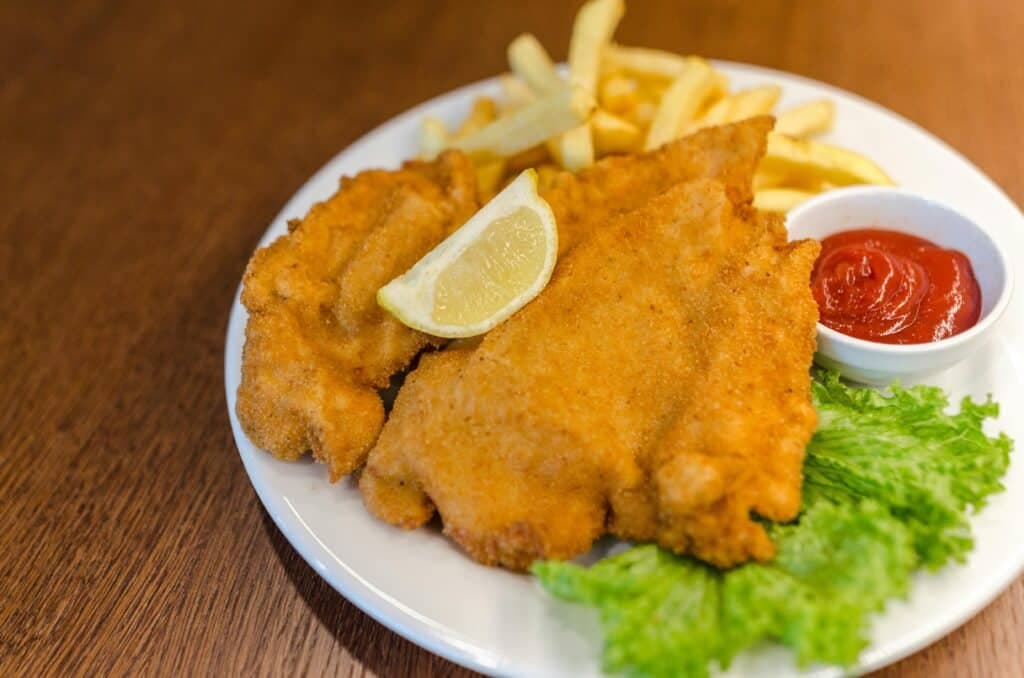
- Schnitzel: a breaded, pan-fried cutlet, done well at places like Scheers Schnitzel, usually served with a wedge of lemon and either potatoes or fries.
- Berliner Weisse: a tart, low-alcohol wheat beer traditionally mixed with a shot of woodruff or raspberry syrup to cut the sourness.
- Tasting menus at fine-dining rooms: Rutz is the standout example, pairing German ingredients with a deep wine list in a format worth saving for a special night out.
- Glühwein: mulled, spiced wine sold at Christmas markets through December, best drunk outdoors in the cold with your hands wrapped around the mug.
- Brunch at a Berlin café: the city takes weekend brunch seriously, and spots like House of Small Wonder in Mitte mix Japanese and German influences on one plate.
FAQ
How many days do you need in Berlin?
Three full days is a reasonable minimum for a first visit. That covers Museum Island, the Memorial of the Berlin Wall, Tiergarten and at least one night out without rushing. Add a fourth day for Charlottenburg Palace or the German Museum of Technology, since Berlin is large and travel time between sights adds up fast.
Is Berlin expensive?
Berlin is moderately priced compared to other major European capitals, cheaper than London, Paris or Amsterdam for similar quality. Budget travelers can get by comfortably on hostel beds and street food, while the cost can climb quickly if you add fine dining or four-star hotels during peak summer months.
Is Berlin safe for tourists?
Yes, Berlin is generally safe for tourists by big-city standards. As in any large European capital, watch for pickpockets in crowds, on busy trains, and around major sights, and keep an eye on your drink and belongings on nights out. Check your government's current travel advice before you go.
Is Berlin a walkable city?
Berlin is walkable within individual neighborhoods but too spread out to cross entirely on foot. Walk around areas like Museum Island or Charlottenburg, then use the U-Bahn, S-Bahn, tram or bus to cover distance, since one ticket type works across all of them.
Do you need a car in Berlin?
No, you don't need a car in Berlin, and driving is usually more hassle than it's worth for a city break. Public transit covers the U-Bahn, S-Bahn, regional trains, trams and buses on one ticket system, making getting around simple and affordable without the headache of parking.
Is English widely spoken in Berlin?
English is widely spoken in Berlin, especially in Mitte, among younger residents, and in the hospitality industry. You'll manage fine without German, though learning a few basic phrases like "danke" and "bitte" goes a long way with older locals and in less touristy neighborhoods.
What's the best time of year to visit Berlin?
Late spring through early autumn, roughly May to September, brings the best weather and longest days for sightseeing. If you'd rather avoid crowds and don't mind the cold, winter months bring lower hotel rates and the Christmas markets, making either end of the calendar worth considering depending on what you're after.
Top Places to Visit in Berlin
View all See & Do
 See & Do
Friedrichstadt-Palast
 See & Do
 See & Do
 See & Do
 See & Do
 See & Do
 See & Do
Reichstag Building
Top Places to Eat in Berlin
View all Eat & Drink
House of Small Wonder
 Eat & Drink
 Eat & Drink
 Eat & Drink
 Eat & Drink
Mustafa's Gemüse Kebap
Berlin's most famous kebab window, and its longest queue.
 Eat & Drink
 Eat & Drink
Schnitzelei Mitte
Schnitzel taken seriously, in a Mitte courtyard.