
Overview
Kyoto spent over a thousand years as the imperial capital of Japan, from 794 until the capital moved to Tokyo in 1868, and the city still carries itself that way. This Kyoto travel guide is built around a simple fact: you cannot see all of it, so you shouldn't try. There are over 1,600 Buddhist temples and 400 Shinto shrines within the city limits, tucked between modern rail lines, convenience stores, and machiya townhouses with wooden slat facades. Kyoto rewards people who slow down. You'll get more out of two neighborhoods explored on foot than six temples rushed through by taxi.
The city sits in a basin ringed by low mountains, which is part of why it gets so humid in summer and so cold in winter. That geography also explains the maple canopies in the eastern hills and the bamboo groves out west in Arashiyama. Kyoto is not a museum piece frozen in the Heian period. It's a working city of roughly 1.4 million people, with a university district, a nightlife strip along the Kamo River, and a food culture that ranges from Michelin-starred kaiseki to standing-room ramen counters near the station.
When to Visit
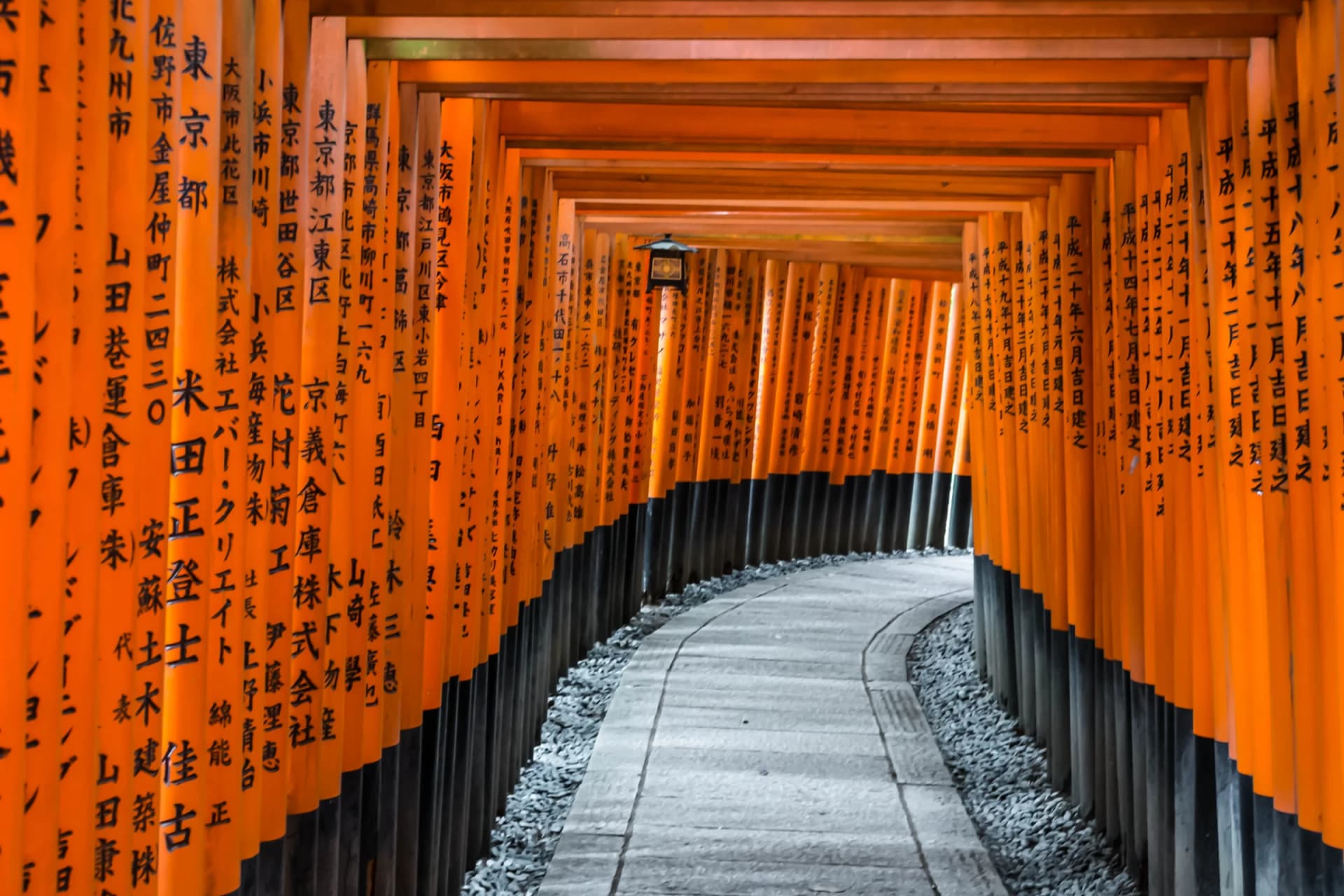
Late March into early April brings cherry blossoms along the Philosopher's Path and the Kamo riverbanks, and it's the single busiest stretch of the year. Hotel rates spike and the popular sites, especially Kiyomizu-dera and Fushimi Inari, get crowded by mid-morning. Early November through the first two weeks of December brings the other peak: autumn foliage in Arashiyama, Tofuku-ji, and the Eikan-do temple grounds, with maples turning deep red against dark wood architecture.
Summer, from June through August, is hot and heavy with humidity, often pushing past 33°C (91°F) with a sticky rainy season in June. It's also when Gion Matsuri takes over downtown in July, with float processions and yukata-clad crowds packing Shijo-dori. Winter is quieter and colder, occasionally dusted with snow that makes Kinkaku-ji's gold pavilion look striking against a white background. If you want fewer crowds and lower hotel prices, aim for mid-January to late February, or the last two weeks of May.
Where to stay
Gion and Higashiyama: cobblestone lanes, machiya-style ryokan, and the closest base for temple-hopping on foot toward Kiyomizu-dera and Yasaka Shrine. Expect higher prices and early-morning tour groups.
Downtown (Kawaramachi/Shijo): the most practical base for first-timers, with easy access to the Hankyu and Keihan train lines, department stores, and the Nishiki Market food arcade.
Kyoto Station area: convenient for day trips to Nara or Osaka and for catching the Shinkansen, with newer business hotels and a less atmospheric but budget-friendly scene.
Arashiyama: quieter, more residential, ideal if you want to see the bamboo grove and Tenryu-ji before the tour buses arrive, though it's a 20 to 30 minute train ride from the city center.
Northern Kyoto (near Kinkaku-ji or Kamigyo-ku): a calmer, more local feel with access to smaller shrines and traditional neighborhoods, at the cost of being farther from the main nightlife strips.
How to reach the destination
Kyoto has no major international airport of its own. Most travelers fly into Kansai International Airport (KIX) near Osaka, then take the JR Haruka limited express directly to Kyoto Station in about 75 to 80 minutes. Osaka's Itami Airport is another option, connected by airport limousine bus in roughly 55 minutes. If you're arriving from Tokyo, the Tokaido Shinkansen bullet train covers the distance in about 2 hours and 15 minutes on the fastest Nozomi service, arriving directly into Kyoto Station.
A Japan Rail Pass, if purchased before your trip and if it still suits your itinerary, can make sense for combining Kyoto with Tokyo, Osaka, or Hiroshima, though the pass's value has shifted since a 2023 price increase, so run the numbers against individual tickets. Overnight buses from Tokyo are the budget option, landing you near Kyoto Station early in the morning for a fraction of the Shinkansen fare.
Getting around the destination
Kyoto's train and bus network is dense but can be confusing at first because so many temples sit outside the subway grid. The city bus system, run mostly by Kyoto City Bus, covers most major sites and a one-day bus pass is often worth it if you're doing three or more rides. The subway has only two lines, the Karasuma and Tozai, useful for crossing downtown quickly but limited for reaching Higashiyama's temple cluster or Arashiyama.
Private railways fill the gaps: the Keihan line runs along the eastern side of the city near Gion, the Hankyu line serves the south and west, and the Randen tram is the scenic, slow way into Arashiyama. Walking is genuinely the best way to experience neighborhoods like Higashiyama and Pontocho, where narrow alleys don't accommodate cars anyway. Taxis are reliable and metered but add up fast for longer crossings. Renting a car is rarely worth it inside the city given narrow streets and limited parking, though it can make sense for day trips into rural Kyoto Prefecture.
Top destination travel tips
Get an IC card (Icoca or Suica) loaded onto your phone or as a physical card. It works across trains, buses, and most convenience stores, saving you from fumbling with ticket machines.
Many popular temples, including Kiyomizu-dera, involve a steep uphill walk from the bus stop. Wear shoes you can slip on and off easily since several sites require removing footwear indoors.
Photography is restricted or banned inside certain temple halls and at some geisha districts in Gion, where a 2019 local ordinance restricts photography on private streets to curb harassment of maiko and geiko.
Tipping isn't expected anywhere in Japan, including restaurants and taxis, and attempting to tip can cause confusion.
Convenience stores like Lawson and FamilyMart are reliable for cash withdrawals, since not all Japanese ATMs accept foreign cards, and 7-Eleven ATMs are usually the safest bet.
Learn a few basic phrases. "Sumimasen" (excuse me) and "arigatou gozaimasu" (thank you) go a long way, and most signage at major sites includes English.
Book dinner reservations for kaiseki restaurants or anything in Pontocho well ahead, since many small counters seat under 15 people and don't take walk-ins.
Plug type in Japan is A/B, running on 100V, which differs from much of Europe and parts of Asia, so bring an adapter if needed.
Typical costs in the destination
Japan runs on the yen (JPY), and Kyoto sits in the mid-range for Japanese cities, cheaper than Tokyo for lodging but comparable for food. Budget travelers can manage on a guesthouse bed and convenience store or noodle shop meals for a modest daily spend, while a mid-range trip with a business hotel room, sit-down meals, and regular train use will cost noticeably more. Temple entry fees are usually small, often in the 300 to 600 yen range per site, though a few major ones like Kinkaku-ji charge a bit more.
A casual bowl of ramen or a set lunch typically falls in a modest, affordable range, while a proper kaiseki dinner at a well-regarded restaurant can run into the tens of thousands of yen per person. Ryokan stays with dinner and breakfast included cost considerably more than a standard hotel room but include a multi-course meal that functions as an experience in itself. Public transport fares are generally low per ride, and a day pass often pays for itself after two or three bus trips.
Must try food and drinks
Kaiseki: multi-course seasonal cuisine that reflects Kyoto's refined culinary tradition, often built around whatever vegetables and fish are at their peak that week.
Yudofu: simmered tofu in a light kombu broth, a specialty tied to the city's temple-cooking (shojin ryori) heritage, especially around the Nanzen-ji area.
Kyo-yasai: heirloom Kyoto vegetables like kamo eggplant and shishigaki persimmon, used across both traditional and modern menus.
Yatsuhashi: a cinnamon-scented sweet made from rice flour, sold either baked and crisp or soft and folded around red bean paste, and one of the most common souvenirs in the city.
Matcha everything: Uji, just south of Kyoto, is one of Japan's most respected matcha-growing regions, so expect matcha in soft serve, sweets, and properly whisked tea ceremonies alike.
Nishin soba: buckwheat noodles topped with a sweet-simmered herring fillet, a Kyoto-specific twist on standard soba.
Obanzai: home-style Kyoto cooking, usually a small selection of simmered, pickled, and grilled dishes served izakaya-style, good for sampling several flavors in one sitting.
Sake and Fushimi's brewing district: the Fushimi neighborhood south of the city has been a sake-producing area for centuries, and several breweries offer tastings within walking distance of each other.
However you plan your days, this Kyoto travel guide is meant to get you past the postcard shots and into the rhythm of a city that rewards patience, whether that means an early start before the crowds at Fushimi Inari or a slow evening walk along the Kamo River as the lanterns come on in Pontocho.
FAQ
How many days do you need in Kyoto?
Three full days is a good minimum for Kyoto, and four lets you slow down. Rather than chasing every temple, pick a few neighborhoods, such as Higashiyama, Arashiyama, and the Kinkaku-ji area, and explore each on foot. Add another day if you want a day trip to Nara or a sake tasting in Fushimi.
Is Kyoto safe for tourists?
Yes, Kyoto is generally considered very safe for tourists, with low violent crime and busy streets in the main districts. Standard precautions still apply: watch your belongings in crowded spots like Fushimi Inari and Nishiki Market during peak seasons, and be careful on narrow streets where bikes and buses share space. Check current travel advisories before you go.
Is English widely spoken in Kyoto?
English is common at major sites and tourist-facing hotels, but not universal. Signage at big temples and stations usually includes English, while small restaurants, local buses, and neighborhood shops may have little. Learning a few phrases like sumimasen and arigatou gozaimasu helps, and a translation app on your phone covers menus and the gaps.
Is Nara worth a day trip from Kyoto?
Yes, Nara is an easy and worthwhile day trip from Kyoto, and Kyoto Station is a convenient base for it. Nara is known for its free-roaming deer in Nara Park and large historic temples such as Todai-ji. Check current train options and times on the day, and start early so you can pair it with a slower evening back in Kyoto.
Can you see geisha in Kyoto?
Yes, you may spot maiko or geiko in Gion, most often around dusk, but sightings are never guaranteed. Treat them as people on their way to work, not photo props. A 2019 local ordinance restricts photography on private streets in parts of Gion, so keep your camera away in those lanes and keep a respectful distance.
Is Kyoto expensive to visit?
Kyoto is mid-range by Japanese standards, and cheaper than Tokyo for lodging. Temple entry fees are small and noodle shops keep meals affordable. The big spends are kaiseki dinners, ryokan stays with meals, and hotel rooms during the cherry blossom and autumn foliage peaks, when rates spike. Confirm current prices before booking.
Top Places to Visit in Kyoto
View all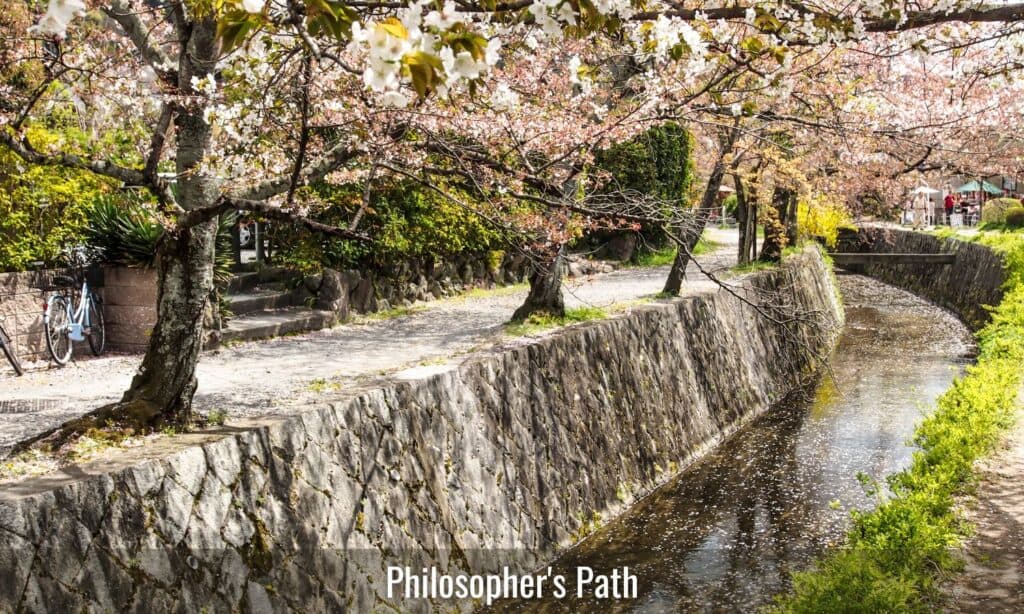 See & DoFree
Philosopher's Path
 See & DoModerate · $$
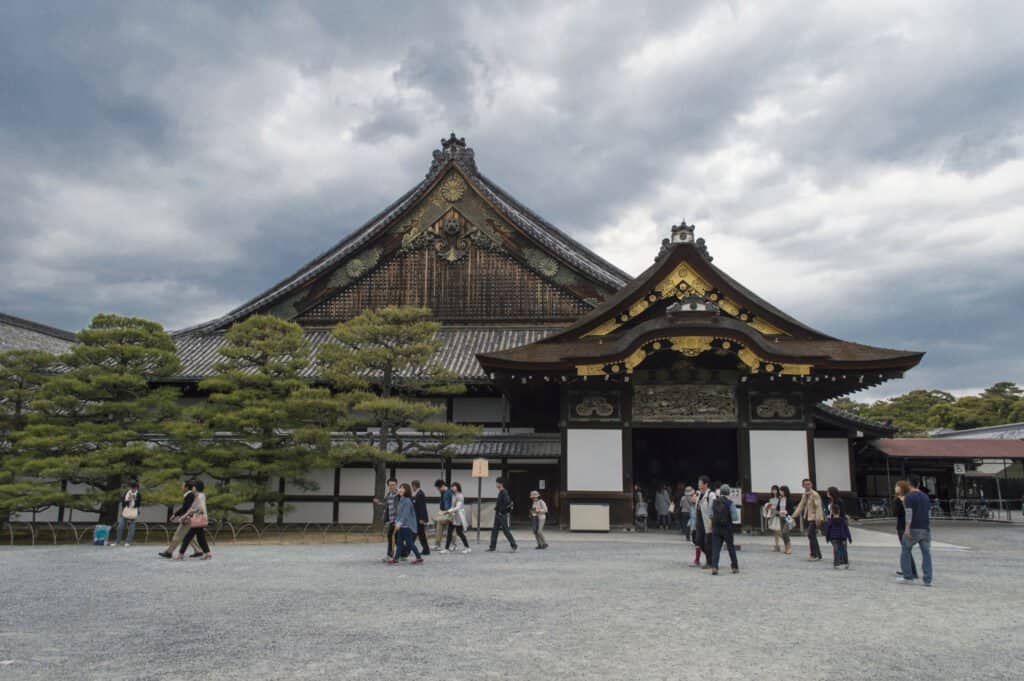
Kyoto Imperial Palace
 See & Do
Nishiki Market Shopping District
 See & Do
Kinkakuji Temple
 See & Do
Arashiyama Monkey Park Iwatayama
 See & Do
Hōkan-ji
 See & Do
Fushimi Inari Taisha Sembon Torii (Thousand Torii Gates)
 See & Do
Kiyomizu-dera Temple
Top Places to Eat in Kyoto
View all Eat & Drink
Gion Kappa Kyoto
 Eat & Drink
 Eat & Drink
Wajoryomen Sugari
 Eat & DrinkEat & Drink
 Eat & Drink
KOBE BEEF Niyama TEPPANYAKI (since 1955)
 Eat & Drink
Wadachi
Eat & Drink