
Catacombs of Saint Sebastian
Via Appia Antica, 136, 00179 Roma RM, ItalyOverview
The Catacombs of Saint Sebastian sit beneath the Appian Way on Rome's southeastern edge, a sprawling network of underground tunnels carved from volcanic tufa rock. Walking down the stone stairs, you enter a different Rome entirely: narrow corridors lit by your guide's flashlight, burial niches stacked floor to ceiling, the air cool and still. This is where early Christians buried their dead for roughly three centuries, starting in the second century, and where the veneration of martyrs began to take shape in the darkness below the city.
Unlike the catacombs beneath Rome's churches, the Catacombs of Saint Sebastian were named after a third-century soldier and martyr. They're one of the few catacombs still actively maintained and open for guided tours, and they remain among the most visited underground burial sites in the world. The site has been in continuous religious use for nearly two thousand years.
Why this place matters
These catacombs matter because they're not a museum retrofit or a reconstructed tourist attraction. They're a genuine archaeological site where the material life of early Christian Rome is still visible: graffiti scratched by visitors centuries ago, burial markers bearing Christian symbols, the actual layout of how families organized their dead. The catacombs reveal how a persecuted religious minority organized itself in the margins of imperial Rome.
The site is also tied directly to the cult of saints. Saint Sebastian's relics were moved here, making the catacombs a pilgrimage destination from medieval times onward. That religious continuity explains why the site survived and why it remains under church stewardship today.
Quick facts
- Location: Via Appia Antica, 136, on Rome's southeastern outskirts
- Approximately 40,000 burials across multiple levels
- Accessible by guided tour only (tours run throughout the day)
- Tour duration: roughly 30 minutes underground
- Closed Tuesdays and for part of December
- Modest entry fee; children under 7 typically admitted free
- No independent wandering; you follow your guide at all times
Getting there
The Catacombs of Saint Sebastian lie on the Appian Way, one of Rome's oldest roads, about 4 kilometers south of the Colosseum. Getting there by public transit requires some patience. The Metro Line A stops at Colli Albani, from which you can take the 660 or 664 bus toward the Appian Way archaeological zone. The walk from the nearest bus stop to the catacombs entrance is roughly 10 minutes uphill.
Alternatively, you can book a private car or taxi, which eliminates the guesswork. If you're renting a scooter or bicycle, the Appian Way is rideable, though traffic can be heavy during midday hours. Driving your own car is possible but parking near the entrance is limited and often full by mid-morning.
Walking from central Rome is not practical. The distance is too great and the roads lack continuous sidewalks.
The layout and experience
Entry is through a small church built above the catacombs in the seventeenth century. You'll wait in a modest courtyard until your tour group assembles, usually 10 to 20 people depending on the season. A guide (in Italian or English, depending on group composition) briefs you on basic safety and rules before descending.
The stairs down are steep and narrow. Once below ground, the tunnels branch in multiple directions, lined on both sides with loculi, the rectangular burial niches carved into the walls. Some niches still have their original sealing tiles. The corridors are low in places, and you'll need to duck. Flashlights are essential, and your guide carries one; the catacombs are lit minimally, if at all.
You'll see several specific areas on most tours. The area known as the Triclia, a chamber with a low arched ceiling where refrigerium meals (commemorative feasts) were held for the deceased, shows evidence of soot from oil lamps. You'll pass burial niches with Christian symbols: fish, anchors, and crosses etched into the stone. In some chambers, children's burials are grouped together, identifiable by the smaller size of their niches.
The tour ends after roughly 30 minutes. You exit through the same entrance and can linger in the courtyard or visit the small museum adjacent to the church.
Main highlights
The primary appeal is seeing how early Christians organized death underground. The density of burials is striking. In some corridors, every available surface holds a grave. This was not a secret refuge, as popular imagination often assumes, but a burial ground that followed Roman law. Non-Christian Romans had similar underground cemeteries.
The graffiti and inscriptions are worth your attention. Many are simple: names, dates, brief prayers. Some are scratched by visitors centuries after the burials, showing how pilgrims left their marks. The oldest inscriptions are often the hardest to read, worn smooth by age and humidity.
The Chapel of Saint Sebastian, deep within the catacombs, is where the saint's body is believed to have been venerated. The exact location of his remains is now uncertain, but the chapel marks the spot that medieval pilgrims sought out. The chamber has a different atmosphere from the burial corridors, quieter and more intentional in its layout.
History and background
The Catacombs of Saint Sebastian began as a burial ground in the second century, during the reigns of the Antonine emperors. Christianity was not yet persecuted at an empire-wide level, so these were not hiding places. They were, however, distinctly Christian spaces where believers buried their dead according to their own practices and beliefs.
The catacombs expanded over the next two centuries as the Christian community grew. By the time of the Edict of Milan in 313, which granted Christianity legal status, the catacombs were already well-established pilgrimage sites. The veneration of martyrs and saints became a defining feature of Christian practice, and the Catacombs of Saint Sebastian, with their association to Sebastian himself, drew pilgrims from across Christendom.
By the fifth century, as above-ground churches became the norm, the catacombs fell into disuse as burial grounds. They were periodically rediscovered and plundered for relics during the medieval period. Serious archaeological excavation began in the nineteenth century, revealing the layout and contents we see today.
Tickets and entry
Entry is by guided tour only. You cannot walk the catacombs independently. Tours depart regularly throughout the day, usually every 15 to 30 minutes depending on season. Ticket prices are modest, in the budget range, with reduced rates for children. Most children under seven enter at no charge.
Tours are offered in multiple languages. If you're planning to visit, confirm the language availability in advance, as English tours may not run every hour during low season. Booking ahead online is recommended during summer months, as tours can fill up.
Guided tour services offered by third-party operators often bundle the Catacombs of Saint Sebastian with other Appian Way sites, such as the Villa of Maxentius or the Tomb of Caecilia Metella. These combination packages can provide better value if you plan to spend several hours in the archaeological zone.
Best time to visit
The catacombs maintain a constant temperature year-round, around 15 degrees Celsius (59 Fahrenheit), so the season affects your comfort less than it does for above-ground sites. However, tourist flow varies dramatically.
Summer, particularly July and August, brings large crowds. Tours may be more frequent but also more rushed, with bigger groups. May, June, and September tend to offer a middle ground: good weather, manageable crowds, and tours that don't feel overstuffed.
Winter is quieter, and the short daylight hours mean fewer people on the Appian Way overall. The main drawback is that some services operate on reduced schedules, and a few tour times may be consolidated or cancelled on very slow days.
The site closes Tuesdays year-round. It also closes for roughly two weeks in December, typically around Christmas.
Photography tips
Photography is typically allowed inside the catacombs, but flash is prohibited. Flash damages the fragile surfaces and is disruptive to other visitors in the confined space. Your phone's camera will struggle in the low light; consider bringing a small external light source or using a high-ISO setting on a dedicated camera.
The narrow corridors and low ceilings make wide-angle shots difficult. Focus on details: close-ups of inscriptions, burial niches, the worn stone of the walls. These details often convey the experience better than attempting broad views of featureless corridors.
The courtyard above ground, with the church and surrounding gardens, offers good natural light for photographs and can serve as a useful "before and after" shot if you're documenting your visit.
Facilities and preparation
The catacombs have no amenities underground. There are restrooms in the courtyard above. Bring water, as you'll be walking in cool, dry air for 30 minutes and may feel thirsty despite the temperature.
Wear comfortable walking shoes with good grip. The stone stairs and floors are smooth and can be slippery, especially if your shoes are worn or have smooth soles. The descent and ascent are not strenuous, but they are steep in places.
Claustrophobia can be an issue for some visitors. The corridors are narrow, the ceilings low in places, and the sense of being deep underground is real. If you have significant claustrophobia, this site may not be suitable. The tour operates at a steady pace and does not allow for lingering, so you cannot turn back once you've begun.
Bring a light jacket or sweater. The 15-degree temperature feels cold after 30 minutes, especially if you're standing still listening to the guide.
How it compares to similar places
Rome has five major catacomb sites open to the public. The Catacombs of Saint Callixtus, also on the Appian Way and about 500 meters south, are larger and more extensively excavated. The Catacombs of Saint Sebastian, by contrast, feel more intimate and less polished. Some visitors prefer this rawer quality; others find the Callixtus site more informative for first-time visitors.
The Catacombs of Saint Priscilla, in the northern part of the city, contain some of the finest early Christian art and frescoes. If you're interested in artistic content, that site offers more visual richness. The Catacombs of Saint Sebastian are more austere, focused on the physical reality of burial rather than decoration.
The main advantage of the Catacombs of Saint Sebastian is its location within the broader Appian Way archaeological zone. You can combine it with other sites in a single visit, making it practical to spend half a day exploring the ancient road and its monuments.
Combining with nearby attractions
The Appian Way archaeological zone extends for several kilometers and contains multiple sites worth visiting. The Tomb of Caecilia Metella, a massive cylindrical monument built in the first century BC, stands about 1.5 kilometers south of the catacombs. It's visible from the road and accessible on foot or by bus.
The Villa of Maxentius, built by the Roman emperor Maxentius in the fourth century, lies between the catacombs and the tomb. It's a large site with ruins of a residence, a circus, and a mausoleum. Entry is separate, and it's less crowded than the catacombs.
The Church of Domine Quo Vadis sits near the catacombs' entrance and marks the legendary spot where Saint Peter, fleeing Rome, encountered Christ. The church is small but historically significant and can be visited in 10 minutes.
A practical half-day itinerary would be to start with the catacombs, walk south to the Tomb of Caecilia Metella, explore the Villa of Maxentius on the return, and finish at the Church of Domine Quo Vadis. The total walking distance is manageable, roughly 3 kilometers of mostly flat ground along the Appian Way.
Sample visit plan
Arrive at the catacombs entrance by 10 AM to secure a tour in your preferred language. Plan for 45 minutes to one hour at the site, including the tour and time in the courtyard afterward. If the next tour is not for 30 minutes, use that time to visit the Church of Domine Quo Vadis nearby.
After your tour, walk south along the Appian Way toward the Tomb of Caecilia Metella. The walk is pleasant and mostly flat, taking 20 to 25 minutes. Stop at the tomb for 20 to 30 minutes to explore. Continue walking or take a bus back toward the catacombs, stopping at the Villa of Maxentius if you have time and interest.
This itinerary assumes you're not rushed. If you want only the catacombs and no other sites, plan 90 minutes total including travel time from central Rome.
Practical tips
- Book your tour online in advance during summer months; walk-up availability is not guaranteed
- Confirm the language of your tour when booking; English tours may not run every hour in low season
- Wear layers; the catacombs are cool, but the walk to and from the site is often warm
- Bring water and a comfortable pair of walking shoes with good grip on smooth surfaces
- Arrive 15 minutes before your scheduled tour time to account for ticket collection
- If you're sensitive to enclosed spaces, ask the guide about the tour route before descending; they can sometimes adjust the experience slightly
- The nearby archaeological zone is large; plan extra time if you want to visit the Tomb of Caecilia Metella or Villa of Maxentius
- Public restrooms are available in the courtyard; there are none underground
FAQ
Are the catacombs actually used as burial sites today? No. They stopped being used for burials by the fifth century. Today they are an archaeological site and a place of pilgrimage, maintained by the church but not actively used for burial or worship.
Can I visit the catacombs without a guide? No. Entry is by guided tour only. This restriction is in place for safety and to preserve the site. You cannot explore independently.
How long does a tour take? The underground portion is roughly 30 minutes. Plan an additional 15 to 20 minutes for the courtyard and ticket area, making 45 minutes to one hour for the full experience.
Is the walk difficult? The descent and ascent involve steep stairs, but the route is short. The underground walking is not strenuous, just slow-paced as the guide explains features. If you have mobility issues, discuss this with staff when booking; they may be able to accommodate you or suggest an alternative.
What's the difference between the Catacombs of Saint Sebastian and the Catacombs of Saint Callixtus? Both are early Christian burial sites on the Appian Way. The Callixtus site is larger and more extensively excavated, making it a better first visit for newcomers. The Saint Sebastian site feels more intimate and less polished, with a stronger connection to the cult of Saint Sebastian specifically.
Opening hours
Reviews
Sign in and mark this place visited to leave a review.
No reviews yet.
Free Trip Planner
Plan your Rome trip with our free planner
Build a day-by-day itinerary with AI suggestions, hand-picked places, and friends. Free forever — no credit card.
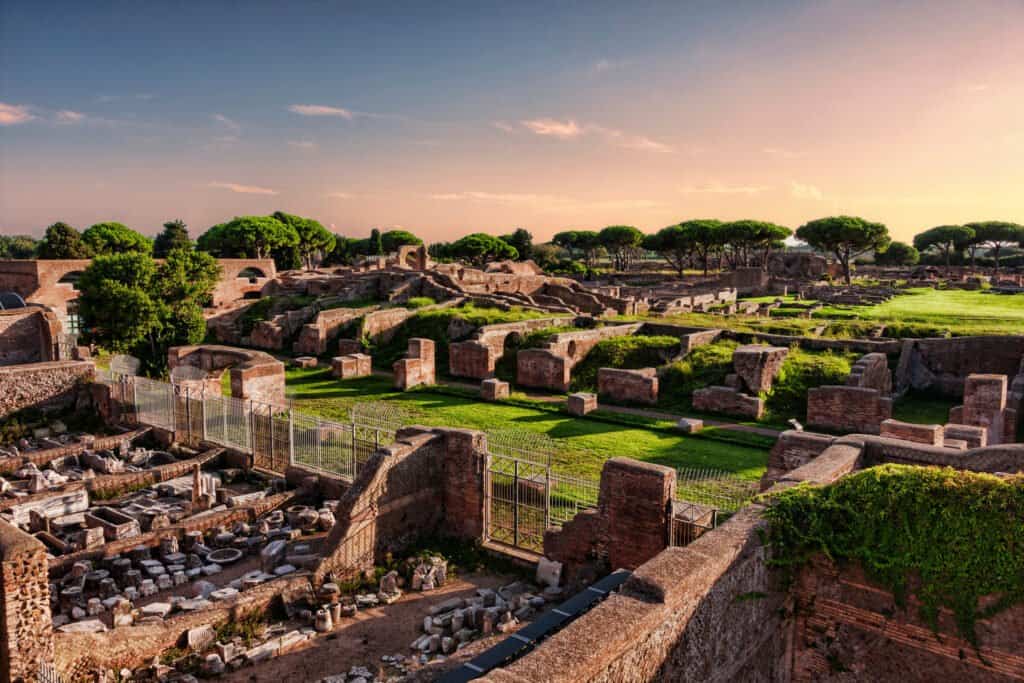
Things to see near Catacombs of Saint Sebastian



Places to eat or drink near Catacombs of Saint Sebastian
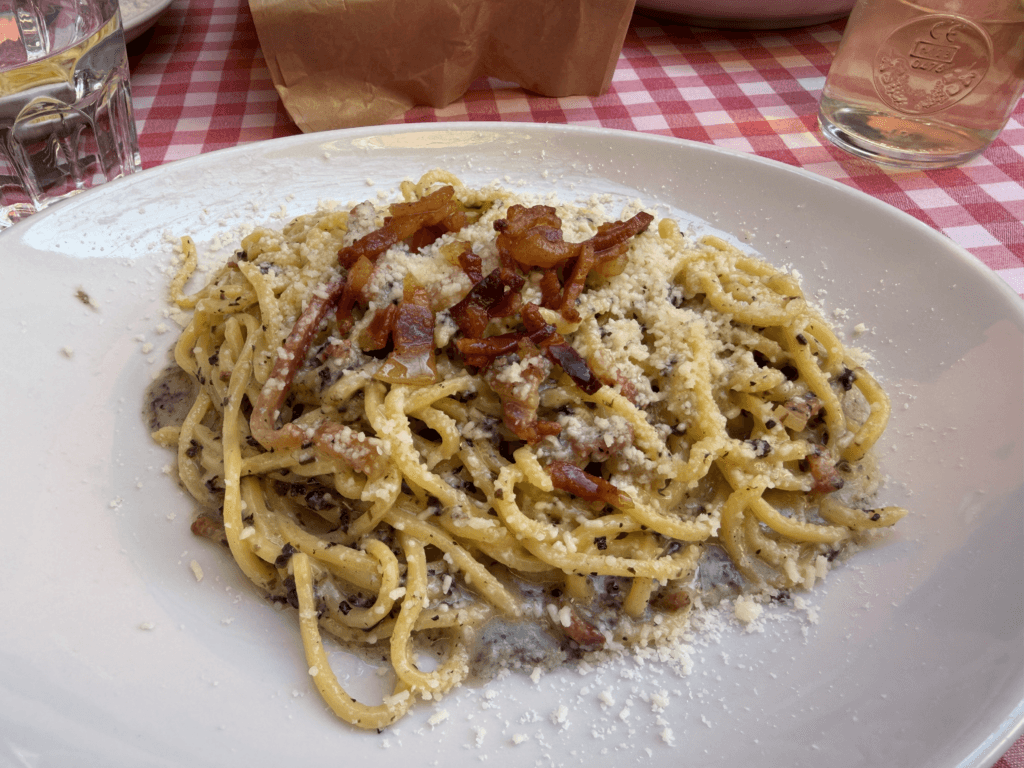
Arianna al Borghetto

La Pietra Scheggiata – Osteria/Pizzeria

Pasticceria Barberini


