
Hostaria Da Cesare Bottega Storica dal 1921
Closed now
Hostaria Da Cesare Bottega Storica dal 1921
Via Crescenzio, 13, 00193 Roma RM, ItalyHostaria Da Cesare Bottega Storica dal 1921
Walk into Hostaria Da Cesare and you step into a room that hasn't pretended to be anything other than what it is for over a century. The wood paneling gleams with the patina of decades. The photos on the walls show Rome in black and white. At lunch, businesspeople in dark coats fill the tables with an ease that suggests they've been coming here since their father's time. This is a Roman institution that operates like a working restaurant, not a museum, which is precisely why locals still fight for tables.
Located on Via Crescenzio near the Tiber, in the neighborhood northwest of Castel Sant'Angelo, Hostaria Da Cesare has been operating since 1921. The restaurant occupies a narrow storefront that opens into surprisingly intimate dining rooms. The name "Bottega Storica" (historic shop) in the full title acknowledges what the space actually is: a piece of Roman commercial life that has survived wars, urban renewal, and the relentless march of tourism.
Why This Restaurant Stands Out
The distinction here is not novelty or reinvention. It's consistency and refusal to compromise on what Roman food means. In a city where restaurants often chase tourists with glossy menus and Instagram aesthetics, Hostaria Da Cesare operates according to a different logic. The kitchen cooks for Romans, and Romans keep coming back.
The restaurant's longevity is itself a statement. Most restaurants don't last five years. Fewer still last a century. That Hostaria Da Cesare has done so without becoming a caricature of itself suggests a deep understanding of what sustains a place: quality ingredients, consistent execution, and an unwillingness to chase trends.
What the Kitchen Is Known For
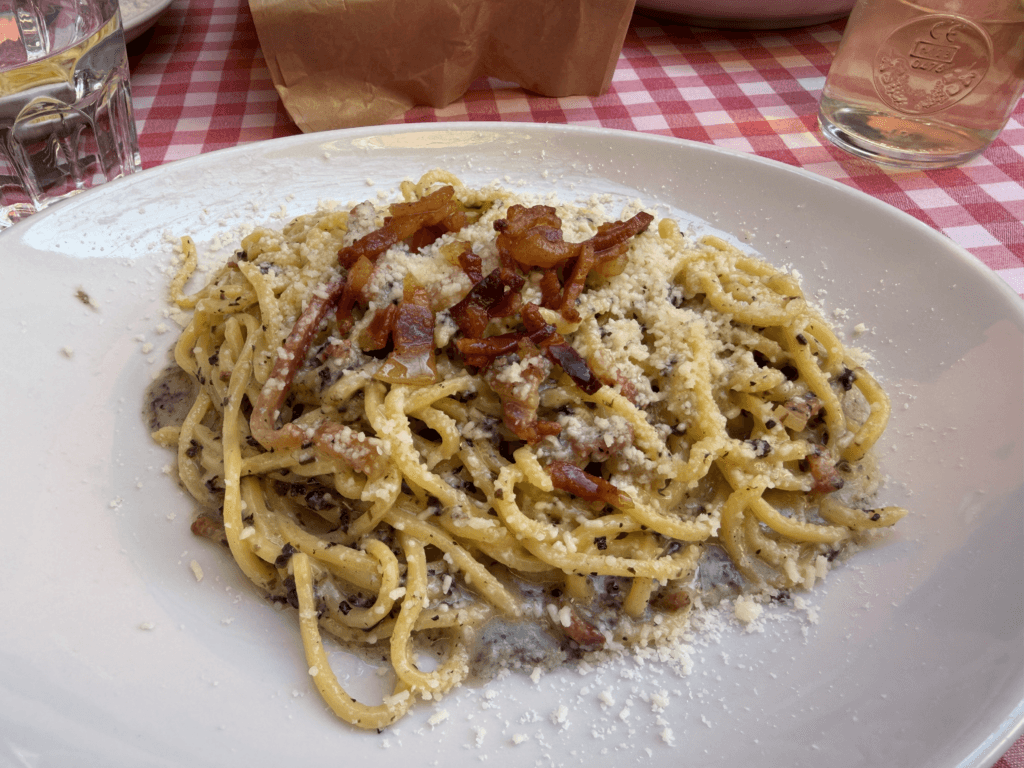
The kitchen has built its reputation on Roman classics executed without flourish or apology. Cacio e pepe appears on the menu, and if you order it, you'll understand why this simple dish of Pecorino Romano, black pepper, and pasta water has endured. The carbonara similarly depends entirely on technique and ingredient quality. Guanciale, eggs, Pecorino: nothing else, done correctly.
Beyond the iconic pastas, the restaurant often features Roman offal preparations that most modern kitchens have abandoned. Liver, tongue, and other organ meats appear regularly. The carciofi alla romana (whole artichokes braised with garlic and mint) shows up consistently. Seafood pastas reflect the proximity to the Tiber, though this is not primarily a fish-focused restaurant.
Seasonal variation is real here. What the kitchen offers in spring differs from autumn not because of a marketing calendar but because that's how ingredient-driven cooking works. Asking your server what's particularly good on a given day is more useful than studying the menu in advance.
Atmosphere and Setting
The dining room feels lived-in rather than designed. The wood is dark. The lighting is warm but not romantic. Tables are close together, which means you're aware of other diners but not intrusively so. The photographs and memorabilia on the walls document the restaurant's own history and Rome's transformation across the 20th century.
This is not a quiet room at lunch. Conversation bounces off the walls. Waiters move between tables with the practiced efficiency of people who have done this work for years. The noise level reflects the fact that people come here to eat and talk, not to perform an experience for social media.
By evening, the energy shifts slightly but doesn't disappear entirely. The room remains animated but the pace slows.
Service and Experience
Service operates on the assumption that you know what you want or that you'll ask for guidance. Waiters are not theatrical. They don't recite specials with memorized enthusiasm. They know the food, they know the regular customers by name, and they move with purpose. If you're uncertain about a dish, asking direct questions gets direct answers.
This is not fine dining service in the contemporary sense. It's professional service oriented toward feeding people well, not toward creating a luxury experience. The distinction matters. Some diners find this refreshing. Others find it less attentive than they prefer.
Reservations and Waits
Reservations are essential, particularly at lunch and on weekends. Walk in without one and you'll likely wait at least 30 to 45 minutes, assuming a table becomes available at all. The restaurant maintains limited seating and doesn't rush diners.
Lunch service tends to be packed from 1 to 2:30 pm. Dinner fills steadily from 8 pm onward. Weekday dinners are more manageable than weekends. If you're flexible on timing, arriving closer to 7 pm on a weeknight gives you better odds of securing a table without advance notice, though a reservation remains preferable.
Price Tier
Hostaria Da Cesare is upscale to expensive by Roman standards. A meal with wine will run well above budget. The cost reflects not novelty or decor but the quality of ingredients and the established reputation. You're paying for the real thing, not for ambiance or service theater.
Best Time to Visit
Spring and fall offer the most comfortable dining conditions, though the restaurant operates year-round. Winter can be cold in Rome, and the intimate space doesn't have robust heating in all areas. Summer heat builds in the narrow room, though it's manageable during evening service.
Avoiding peak tourist season (July, August, early September) means the dining room skews more toward locals and repeat visitors. The restaurant's character emerges more clearly when the crowd reflects Rome rather than tourism.
Weekday lunches attract working Romans. Dinner service draws a mix of locals and visitors who have done their research. There's no "wrong" time, but the experience shifts depending on when you arrive.
Good to Know Before You Go
Bring cash or confirm credit card acceptance in advance. Many Roman restaurants of this generation operate on cash-preferred systems, though this is changing. Check when booking.
The restaurant is a short walk from Castel Sant'Angelo and the Tiber. If you're exploring the neighborhood, this location makes sense geographically. It's accessible by public transport but not immediately adjacent to a major metro stop. Walking from the historic center takes roughly 15 to 20 minutes depending on your starting point.
The wine list leans toward Italian selections. If you have preferences, mentioning them to your server helps. House wine is available but the list rewards exploration.
Neighborhood and Location Context
Via Crescenzio sits in a quieter quadrant of Rome, removed from the densest tourist corridors but still walkable from the centro storico. The area around Castel Sant'Angelo has restaurants catering to every taste. Hostaria Da Cesare stands apart because it's not trying to cater to anyone in particular. It's a neighborhood restaurant that happens to be world-known.
The street itself is narrow and residential. The surrounding buildings are predominantly five or six stories, mixed residential and commercial. This is not a gentrified zone trying to seem authentic. It simply is authentic because the neighborhood hasn't been flattened and rebuilt.
Who This Is For
This restaurant serves the serious eater interested in Roman cuisine without theatricality. It's for people who want to eat well in a room that reflects genuine Rome rather than a stylized version of it. It suits business diners, couples comfortable with a no-frills environment, and anyone who finds contemporary restaurant culture exhausting.
It's less suitable for those seeking fine dining presentation, elaborate plating, or an atmosphere designed for special occasions. The occasion here is simply eating well in a place that has earned its reputation through consistency, not innovation.
FAQ
Do I need to speak Italian? Not essential, though basic politeness in Italian ("buongiorno," "grazie") is appreciated. Servers may have limited English, so having key words or phrases written down or translated in advance helps. Pointing to dishes on the menu is always viable.
What's the dress code? Smart casual is appropriate. This isn't formal dining but it's not casual either. Avoid beachwear or athletic wear. Romans dress with intention even at lunch.
Can I get a table for a large group? The restaurant accommodates groups but the space is limited. Reservations for groups of six or more should be made well in advance, ideally a week or more ahead.
What if I don't eat meat? The menu includes vegetable preparations and seafood options. Alerting the kitchen to dietary preferences in advance ensures they can accommodate you properly.
Is this place good for a quick lunch? Not if you're in a rush. Service is efficient but unhurried. Plan 90 minutes minimum for a complete meal.
Opening hours
Reviews
Sign in and mark this place visited to leave a review.
No reviews yet.
Free Trip Planner
Plan your Rome trip with our free planner
Build a day-by-day itinerary with AI suggestions, hand-picked places, and friends. Free forever — no credit card.
Things to see near Hostaria Da Cesare Bottega Storica dal 1921



Places to eat or drink near Hostaria Da Cesare Bottega Storica dal 1921
Arianna al Borghetto

La Pietra Scheggiata – Osteria/Pizzeria

Pasticceria Barberini


