
 Posted by Brandon B.Admin
La Recolección: Antigua's Most Atmospheric Ruin
If you only visit one ruined church in Antigua, Guatemala, make it La Recolección. That's a bold claim in a city where colonial ruins line almost every other block, but this one earns it. The sheer scale of the complex stops most visitors in their tracks the moment they step through the entrance on Calle de Recoletos, near the corner of Calle Poniente. Roofless nave, collapsed arches, and walls thick enough to belong to a fortress — La Recolección is one of the largest and most visually dramatic ruins in all of Central America.
Antigua itself is a UNESCO World Heritage Site, and La Recolección sits in the western part of the city, a short walk from the central plaza. The surrounding streets are quieter than the tourist corridor near Parque Central, which means you often arrive here without the crowds that fill Santa Catalina Arch or the Cathedral on the main square.
Why La Recolección Matters
The complex was originally built for the Recollect Franciscans, a reformed branch of the Franciscan order, and construction began in the early 18th century. It was one of the grandest religious building projects the colonial capital had seen. Then the earthquakes of 1717 damaged it significantly before the structure was even fully completed. The catastrophic Santa Marta earthquakes of 1773 finished the job, leaving the vaulted ceilings open to the sky and the walls in the dramatic, frozen-collapse state you see today.
What makes La Recolección different from ruins like San Francisco el Grande or La Merced is its rawness. There has been relatively little reconstruction here. You are looking at something close to how the site appeared in the decades after 1773, with tropical vegetation working its way through the stonework and the light falling differently depending on the hour.
Quick Facts
- Location: Calle Poniente at Calle de Recoletos 1, western Antigua
- Walking distance from Parque Central: roughly 10 to 15 minutes on foot
- Entry: modest admission fee collected at the entrance
- Construction began: early 1700s
- Destroyed: Santa Marta earthquakes of 1773
- Type: open-air ruined church and convent complex
- Photography: permitted throughout the site
Getting There
From Parque Central, head west along 1a Calle Poniente. The walk takes around 10 minutes at a casual pace and passes through a residential stretch of the city that most short-stay visitors never see. The entrance to La Recolección is on your left as you approach the junction with Calle de Recoletos. There's no dramatic signage, so keep an eye on the street numbers.
Tuk-tuks, which are everywhere in Antigua, can drop you right at the door for a small fare. If you're coming from the bus terminal on the south side of the city, the western ruins make a logical first stop before working your way back toward the center.
The Layout and Experience
The complex is larger than it looks from the street. Once inside, you move through what was the main church nave, which stretches well over 100 meters in length. The walls rise on both sides, some reaching several stories, with empty window frames and broken arches framing the sky above. Grass and shrubs grow from the stonework. On a clear morning, Volcán Agua is visible through the gaps.
Beyond the main nave, a series of connected rooms and courtyards spread out toward the back of the site. These would have been the convent quarters, storage areas, and cloisters. The stonework here is in varying states of collapse, and some areas require a bit of careful footing. Wear shoes with grip rather than sandals.
The scale is genuinely surprising. La Recolección was not a modest parish church — this was a major institutional complex designed to house a substantial religious community, and the ambition of the original builders is still legible in the surviving walls.
History and Background
The Recollect Franciscans arrived in Santiago de los Caballeros de Guatemala, as Antigua was then known, in the late 17th century. Their order emphasized austerity and a return to the stricter original Franciscan rule, which makes it somewhat ironic that the church they eventually built was among the most ambitious in the city.
Construction on La Recolección began around 1701 and continued for years. The 1717 earthquake caused serious damage before the complex was complete, but rebuilding efforts continued. When the 1773 earthquakes struck, the damage was irreparable. Spanish colonial authorities debated for years whether to rebuild Antigua or relocate the capital entirely. They eventually moved the capital to what is now Guatemala City, and Antigua was largely left behind — which is, paradoxically, why so much of it survived intact as a heritage site.
La Recolección was never rebuilt. It has stood in its ruined state for over 250 years.
Best Time to Visit
Morning light hits the western facade first, making the hour after opening genuinely beautiful for photography and atmosphere. By mid-morning on weekends, small tour groups tend to arrive, so if you prefer the place to yourself, earlier is better.
During Semana Santa, Antigua fills with visitors from across Guatemala and internationally, and even the quieter ruins see more foot traffic. That said, the overall atmosphere of the city during Holy Week is extraordinary, and La Recolección, with its Franciscan roots, carries particular resonance during that period.
The dry season, roughly November through April, means cleaner skies and less mud underfoot. The rainy season brings dramatic clouds that actually photograph beautifully against the open walls, but you may want to bring a light rain layer.
Photography Tips
La Recolección rewards patience. The light changes quickly inside the nave as the sun moves, and the best shots tend to come when a shaft of light cuts through one of the high window openings and illuminates the rough stone floor below. This happens most reliably in the mid-morning.
The rear courtyards offer compositions that the main nave doesn't: lower walls, more vegetation, and a sense of depth with multiple ruined arches receding into the background. Wide-angle lenses work well throughout. If you're shooting with a phone, the open sky above the nave can fool your exposure meter, so tap on the shadowed stonework to get the foreground right.
One angle that many visitors miss is looking back toward the entrance from deep inside the nave. The doorway frames the street and the trees outside, and the contrast between the dark interior walls and the bright exterior makes for a strong image.
Combining with Nearby Attractions
La Recolección sits at the western edge of Antigua's main historic zone, which makes it a natural starting point for a loop through the city's ruins. From here, you can walk east toward the Alameda de Santa Lucía, Antigua's main market street, and then continue to Parque Central, stopping at the Cathedral ruins along the way.
Cerro de la Cruz, the hilltop viewpoint that looks down over the city with Volcán Agua in the background, is about 20 minutes on foot from La Recolección and makes a natural pairing for a morning out. Many visitors combine the two before the midday heat sets in.
If you're interested in the Franciscan presence in Antigua more broadly, San Francisco el Grande on the eastern side of the city offers a counterpoint: parts of it were rebuilt and remain in use as an active church, so the two sites together show you both ends of the post-1773 spectrum.
Practical Tips
- Wear closed-toe shoes with grip — the ground is uneven and some areas have loose stone
- Bring water, especially in the dry season; there are no facilities inside the ruins
- Arrive within the first hour of opening for the quietest experience
- The site is mostly unshaded, so sunscreen matters more than you might expect in the morning
- A small amount of local currency (quetzales) is useful for the entrance fee
- There is no official café or shop on site; the nearest options are a few blocks east toward the market
- The ruins are largely accessible at ground level, though some areas require careful footing
FAQ
Is La Recolección safe to visit?
Yes. The site is staffed and enclosed. Antigua overall has a significant tourist police presence, and the area around La Recolección, while quieter than the central plaza, is well-traveled during the day.
How long should I plan to spend here?
Most visitors spend between 30 and 60 minutes exploring the full complex. Photographers and those who enjoy sitting with a place tend to stay longer. It's not a site that rewards rushing.
Is it suitable for children?
Generally yes, though the uneven ground requires attention with younger kids. There's plenty of open space and the scale of the ruins tends to make a strong impression on children who like big, dramatic spaces.
Is there a guided tour option?
Independent guides sometimes operate near the entrance, and many Antigua walking tour operators include La Recolección on their routes. A guide adds meaningful context, particularly for understanding the 1773 earthquakes and their role in shaping the city.
Can you visit La Recolección and Parque Central in the same morning?
Easily. The walk between them is about 10 to 15 minutes, and both sites tend to be at their best before noon. Starting at La Recolección and walking east toward the center is a natural route that takes you through several residential blocks most visitors skip entirely.
Reviews
Sign in and mark this place visited to leave a review.
No reviews yet.
Free Trip Planner
Plan your Antigua trip with our free planner
Build a day-by-day itinerary with AI suggestions, hand-picked places, and friends. Free forever — no credit card.
Related reading


Things to see near La Recoleccion


Places to eat or drink near La Recoleccion

Mesón Panza Verde

Por Qué No? Cafe

Mellow coffee

Hot Chiplin Bar and Restaurant
More places in Antigua

MUNAG – Museo Nacional de Arte de Guatemala

Centro Cultural La Azotea
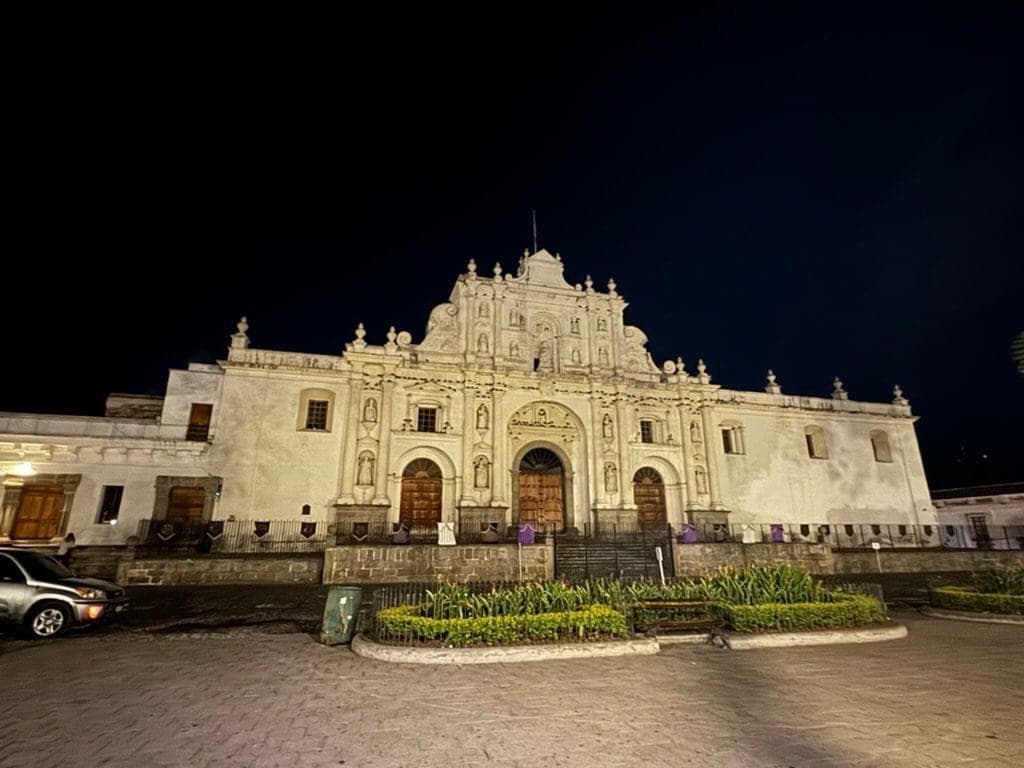
Cathedral de Santiago Antigua
