
Querétaro on the map
12 places from this guide. Tap a pin to open the listing.
Querétaro sits roughly 200 kilometers northwest of Mexico City, a colonial capital built from pink quarry stone that somehow avoided the tourist crush that hit San Miguel de Allende a generation ago. This Querétaro travel guide pulls together coverage of the city's churches, museums, and markets to give you a starting point that goes beyond a single plaza. The historic center, declared a UNESCO World Heritage Site in 1996, is dense with baroque facades, shaded courtyards, and a street grid that still follows the original Spanish and indigenous Otomí layout from the city's founding in 1531.
What makes Querétaro worth the detour from the more famous Bajío towns is its layering of history. This is a city where independence plots were hatched in private homes, where an emperor was executed on a hill now ringed by a public park, and where Dominican nuns built one of the most unusual facades in colonial Mexico. None of it feels staged for visitors. Locals still use the main plazas for their evening paseo, and the markets sell to residents first, tourists second.
When to Visit
Querétaro sits at roughly 1,820 meters above sea level, which keeps temperatures mild year-round compared to coastal Mexico. The dry season runs from November through April, with sunny days and cool nights, and this is when most travelers come. December through February can dip cold enough at night to want a jacket, especially if you're out late around Jardín Zenea.
The rainy season, May through October, brings short afternoon downpours rather than all-day washouts, and mornings are usually clear. If you want to time a visit around an event, look at Semana Santa, when the historic center hosts processions that wind past the cathedral and several of the colonial churches, or the Feria de Querétaro in early December, a large regional fair with rides, concerts, and agricultural exhibits held at the fairgrounds outside downtown. May 3, the Día de la Santa Cruz, is a notable local date tied directly to the Convento de la Santa Cruz, where the city's founding legend involves a cross appearing in the sky.
Where to stay
- Centro Histórico: the obvious base, and probably the right one for a first visit. You're walking distance from Jardín Zenea, the Museo Regional de Querétaro, and the Templo de Santa Rosa de Viterbo, with its oversized flying buttresses that look more like ship rigging than church architecture. Expect boutique hotels in converted colonial houses alongside a handful of international chains near the edges.
- Around La Cruz: a quieter residential pocket east of the strict center, within easy reach of the Convento de la Santa Cruz and the Mercado de la Cruz. Fewer hotels here, more short-term rentals, and a more local pace once the sun goes down.
- Near Cerro de las Campanas: good if you've got a rental car or don't mind taxis, since it puts you close to the hill park and the Universidad Autónoma de Querétaro campus, but it's a 15 to 20 minute walk or short ride from the main plazas.
How to reach the destination
Querétaro Intercontinental Airport (QRO) handles a modest schedule of domestic flights plus a few international routes, mostly to the United States. For most travelers, it's simpler to fly into Mexico City International Airport (MEX) and connect overland. First-class bus lines, including ADO and Primera Plus, run frequent departures from Mexico City's Terminal Norte to Querétaro's Central de Autobuses, with the trip taking around two and a half to three hours depending on traffic on the Autopista México-Querétaro.
Driving is also straightforward if you're coming from the Bajío region or Mexico City, since the city sits directly on Highway 57, one of the country's main north-south corridors. If you're coming from San Miguel de Allende, the drive is under an hour.
Getting around the destination
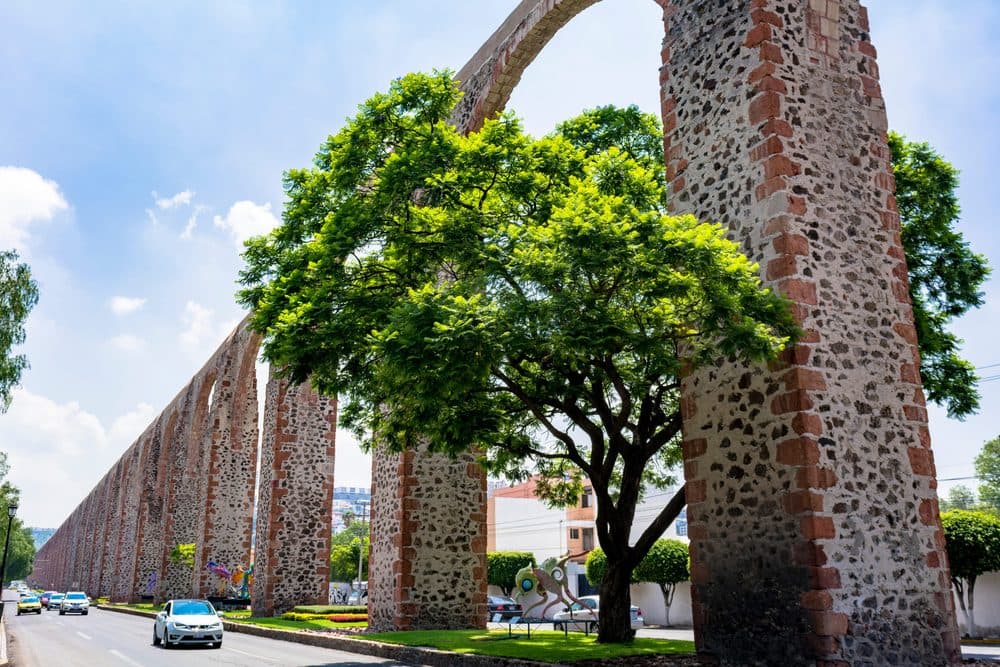
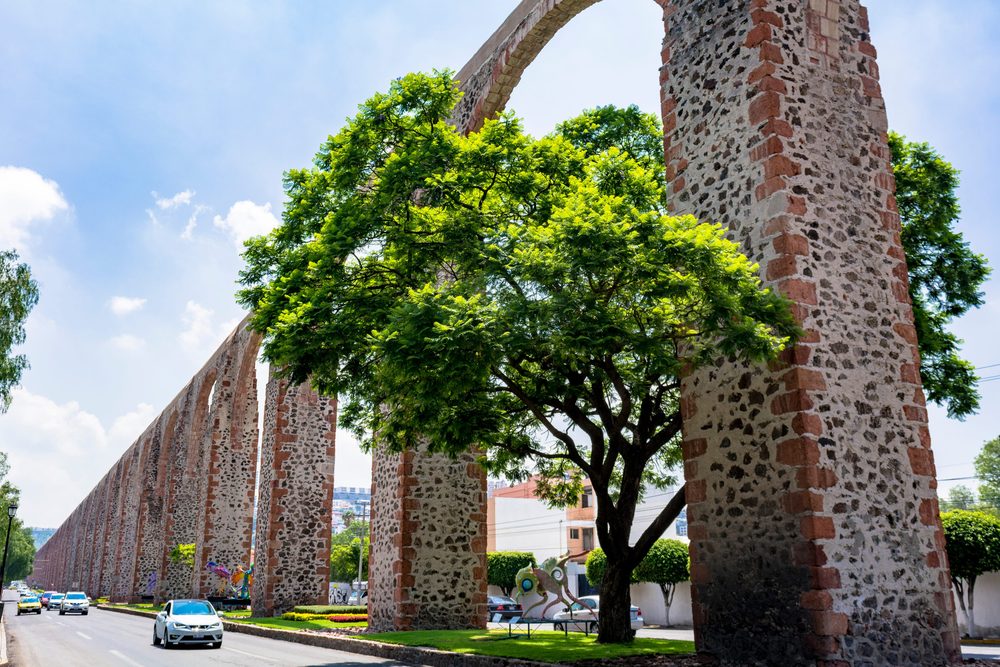
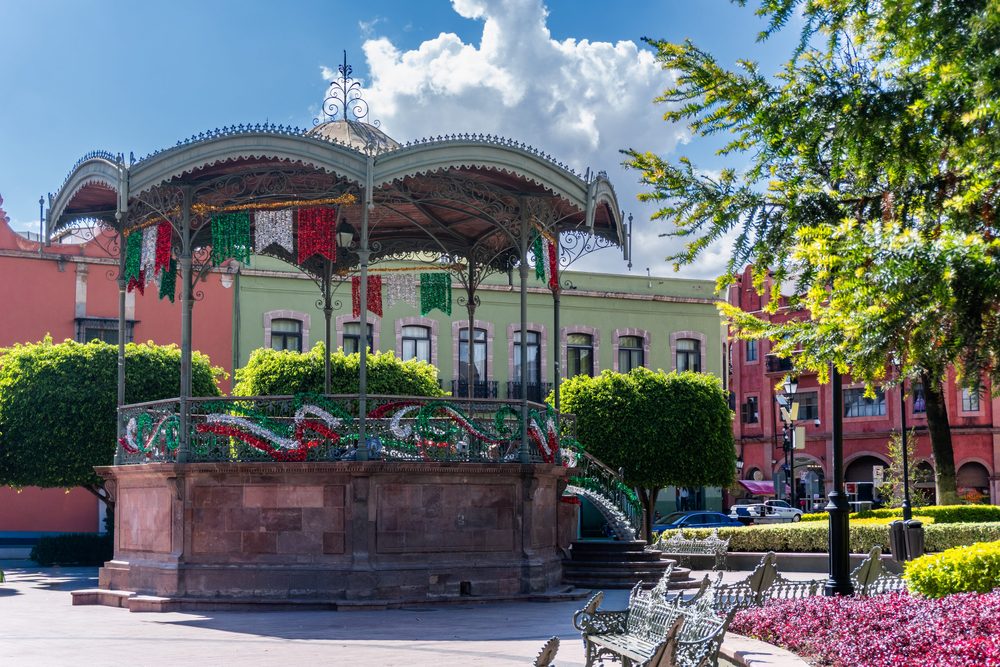
The historic center is flat and compact enough to cover on foot, and honestly this is the best way to see it. Many streets are pedestrian-only, closed to cars entirely, which makes wandering between the Jardín Zenea and the surrounding plazas easy without worrying about traffic. For views of the city's most photographed landmark, head to the Mirador de los Arcos, a lookout point that frames the Acueducto de Querétaro's stone arches against the skyline, particularly striking around sunset.
For anything outside the center, Uber operates reliably throughout the city and tends to be the simplest option for visitors who don't speak much Spanish. Local buses cover a wider network but routes aren't always intuitive if you're unfamiliar with the city. Taxis are plentiful too, though it's worth confirming a price before getting in if the cab isn't metered.
Top destination travel tips
- The altitude can catch first-time visitors off guard. If you're arriving from sea level, take it easy the first day and drink more water than usual.
- Many small shops and some restaurants in the center close for a few hours in the early afternoon, then reopen into the evening. Don't assume everything stays open straight through the day.
- Spanish is the default language almost everywhere outside hotels geared toward foreign visitors. A basic phrasebook goes a long way.
- Tap water isn't considered safe to drink. Bottled or filtered water is sold everywhere and cheap.
- Querétaro is generally considered one of the safer mid-sized cities in Mexico, but standard city precautions still apply, especially around the bus terminal and after dark outside the lit, pedestrian core.
- If you have an extra day, the wine country around the Valle de Querétaro and the town of Bernal with its massive monolith are both reachable on a day trip.
Typical costs in the destination
Mexico's currency is the Mexican peso (MXN). Querétaro runs noticeably cheaper than Mexico City or San Miguel de Allende for food and lodging, while still offering plenty of upscale options if you want them.
- Street food and market stalls, including the stands inside Mercado de la Cruz, fall solidly into budget territory, often just a few dollars' worth of pesos per item.
- A sit-down meal at a mid-range restaurant in the center runs moderate, with mezcal and local wine pushing the bill up if you order drinks.
- A restaurant like Tikua Sur Este, which leans into contemporary regional cooking, sits closer to the upscale end for the city, though still well below what similar cooking would cost in Mexico City.
- Museum entry across the city's smaller institutions, including the Museo de Arte de Querétaro and the Museo Casa de la Zacatecana, tends to be inexpensive, often just a handful of pesos, with many offering free admission on specific days. Confirm current pricing and free days before you go since these details shift.
- Lodging spans from simple budget guesthouses to boutique colonial hotels at upscale rates, with the biggest price jump tied to proximity to Jardín Zenea.
Must try food and drinks
- Enchiladas queretanas: a regional take on enchiladas, typically made with a milder red sauce than you'd find further south, often served with shredded chicken or potato and carrot.
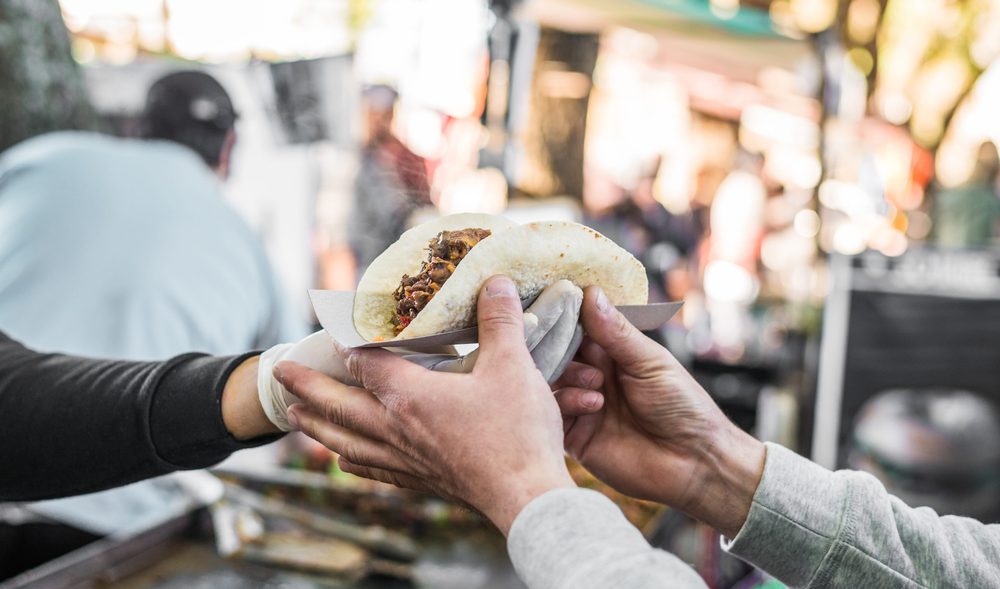
- Gorditas: thick corn pockets stuffed with everything from chicharrón to beans to mole, sold fresh at market stalls and street carts across the center.
- Nopales: grilled or stewed cactus paddle, a staple side across central Mexico and common on Querétaro menus.
- Local wine: the Valle de Querétaro has become one of Mexico's more established wine regions, and you'll find bottles from nearby vineyards on menus throughout the city.
- Nieves and sweets: for something cold and sweet, look for traditional ice cream stands, and for packaged regional candy and preserves, Dulzura Queretana is a reliable stop for taking something home.
- Mezcal and pulque: both are widely available in bars around the center if you want something stronger than the local wine.
FAQ
How many days do you need in Querétaro?
Two full days covers the historic center comfortably, including the main churches, museums, and the aqueduct viewpoint. Add a third day if you want to take a day trip to Bernal or the surrounding wine valley without rushing.
Is Querétaro safe for travelers?
Querétaro is generally regarded as one of Mexico's safer mid-sized cities, and the historic center sees heavy foot traffic well into the evening. Standard precautions still apply, particularly around the bus terminal and less-lit streets outside the core.
Is Querétaro walkable?
Yes, the historic center is flat, compact, and largely pedestrianized, making it easy to cover the main sights on foot. You'll want a taxi or rideshare for anything near Cerro de las Campanas or the university area.
Is Querétaro worth a day trip from Mexico City or San Miguel de Allende?
It's possible as a day trip from either city, since both are under three hours away by bus or car, but the historic center rewards at least one overnight stay. A single day leaves little room for the museums and markets beyond the main plaza.
Do people speak English in Querétaro?
English is spoken in hotels and some restaurants geared toward visitors, but it's far from universal. Learning a few basic Spanish phrases makes getting around markets and smaller eateries much easier.
What's the best month to visit Querétaro?
October through April generally offers the most reliable weather, with dry days and mild temperatures thanks to the altitude. December brings the added draw of the Feria de Querétaro, though it also means more visitors and traffic around the fairgrounds.
Top Places to Visit in Querétaro
View all See & Do
Acueducto de Querétaro
 See & Do
Templo de Santa Rosa de Viterbo
Inverted buttresses outside, gilded churrigueresque within.
 See & Do
Jardín Zenea
The main square, with a cast-iron bandstand and a nightly crowd.
 See & Do
Mirador de los Arcos
The terrace looking straight down the line of the aqueduct.
 See & Do
Museo Regional de Querétaro
The regional museum, in a Franciscan monastery off the main square.
 See & Do
Museo de Arte de Querétaro
Colonial painting in an exceptional baroque Augustinian cloister.
 See & Do
Cerro de las Campanas
The hill where Maximilian was executed in 1867.
 See & Do
Convento de la Santa Cruz
The missionary college above the city, and its cross-shaped thorns.
Top Places to Eat in Querétaro
View all Eat & DrinkBudget · $
Dulzura Queretana
 Eat & Drink
Tikua Sur Este
Cooking from Mexico's southeast, in a Querétaro courtyard.
 Eat & Drink
Mercado de la Cruz
The working market, and the home of the gordita de migajas.